BYD
SEAL U
Understand the differences between versions and calculate a reference for your energy costs.
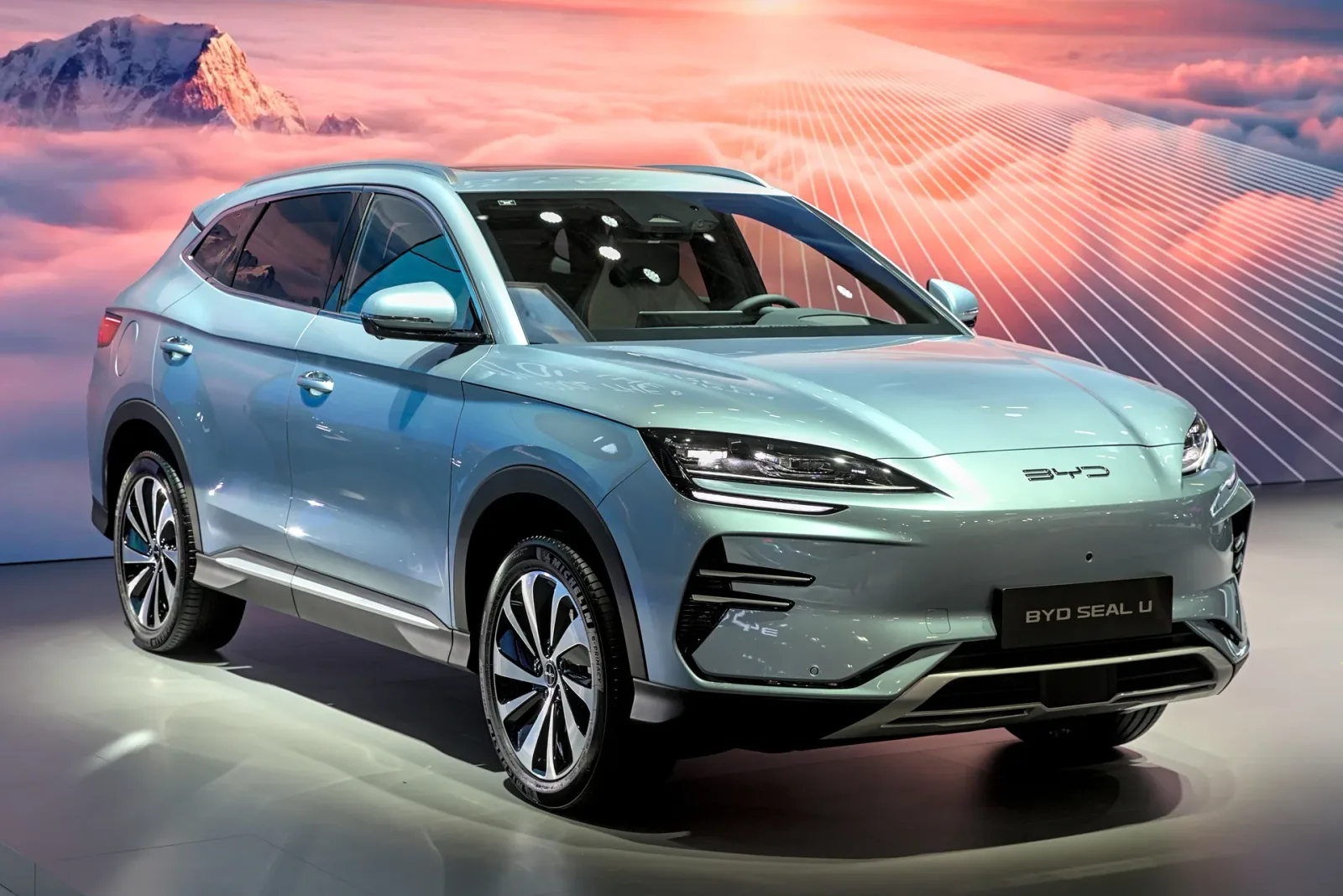
Credits
- Creator
- Alexander-93
- Photograph
- BYD Seal U IAA 2023 1X7A0368.jpg
- Source
- View original photograph
- License
- CC BY-SA 4.0
- Changes
- Proportionally resized and converted to WebP. No crop or alteration of the vehicle.
Alexander-93 / Wikimedia Commons
The optimized copy retains the stated license. No creator endorsement is implied.
420 km
WLTP
71.8 kWh
Published battery capacity
Published capacity without a gross/usable distinction.
Selected version: Comfort
For everyday driving
What will I spend on energy?
What will I spend on energy?
Use the price you pay per kWh. We do not assume a tariff.
We are using 19.9 kWh/100 km
Combined WLTP consumption
Enter your price to calculate a reference per 100 km.
Energy costs based on WLTP, not a prediction of your driving or the total cost of the car.
How it is calculated ↓Understand your choice
What changes between versions?
Comfort compared with
- Kerb weight
- Comfort2,020 kg
- Design2,147 kg
- Combined WLTP range
- Comfort420 km
- Design500 km
- Combined WLTP consumption
- Comfort19.9 kWh/100 km
- Design20.5 kWh/100 km
- Published battery capacity
- Comfort71.8 kWh
- Design87 kWh
- Maximum DC charging power
- Comfort115 kW
- Design140 kW
Higher peak power does not establish a shorter charging session.
Combined type-approval cycle; not a particular journey.
Explore the details
Technical specifications
Comfort · Market: Spain
Battery
- Battery type
- BYD Blade Battery (LFP)
- Published battery capacity
- 71.8 kWh
Published capacity without a gross/usable distinction. We do not use an ambiguous capacity to calculate range or charging sessions.
Range and consumption
- Combined WLTP range
- 420 km
- Combined WLTP consumption
- 19.9 kWh/100 km
- WLTP city range
- 576 km
- WLTP city consumption
- 14.5 kWh/100 km
Combined type-approval cycle; not a particular journey.
Charging
- Maximum AC charging power
- 11 kW
- Maximum DC charging power
- 115 kW
Higher peak power does not establish a shorter charging session.
DC session · 10–80%: 42 min
Reference temperature: 25 °C · Charger above 100 kW · Above 500 V · CCS2
DC session · 30–80%: 27 min
Reference temperature: 25 °C · Charger above 100 kW · Above 500 V · CCS2
Performance
- Drivetrain
- Front-wheel drive
- Maximum power
- 160 kW
- Kerb weight
- 2,020 kg
- Maximum torque
- 310 Nm
- 0–100 km/h acceleration
- 9.3 s
- Top speed
- 175 km/h
Dimensions
- Length
- 4,785 mm
- Width
- 1,890 mm
- Width including mirrors
- 2,085 mm
- Height
- 1,668 mm
- Wheelbase
- 2,765 mm
- Boot capacity
- 425 L
- Boot with rear seats folded
- 1,440 L
Data and methodology
Versions documented for Spain. Technical documentation does not guarantee immediate availability or stock.
Cost per 100 km = WLTP consumption × price per kWh. No extra losses or speed/temperature adjustments are added.
Sources and review dates
Documents consulted for the versions on this page. The date records our source review, not a road test or current availability.
- BYD SEALION 7 — Catálogo español y características técnicas
BYD Motors Iberia S.L.U. · Reviewed
- BYD SEAL U — ES technical documentation
BYD · Reviewed